



As one of the largest companies in Petromin, Petrolube’s progress on carbon reduction takes the whole organization closer to our net zero ambition.
Leveraging Logistics to Reduce Our Carbon Footprint
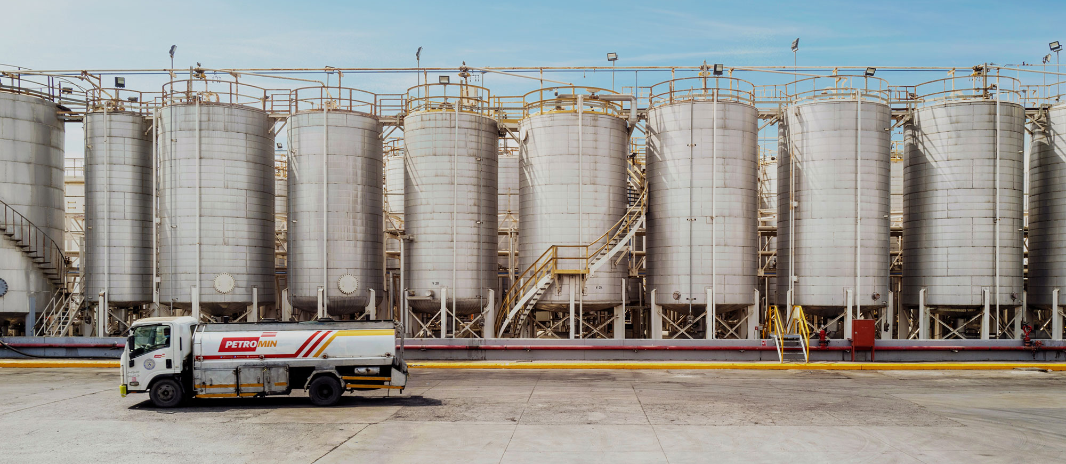
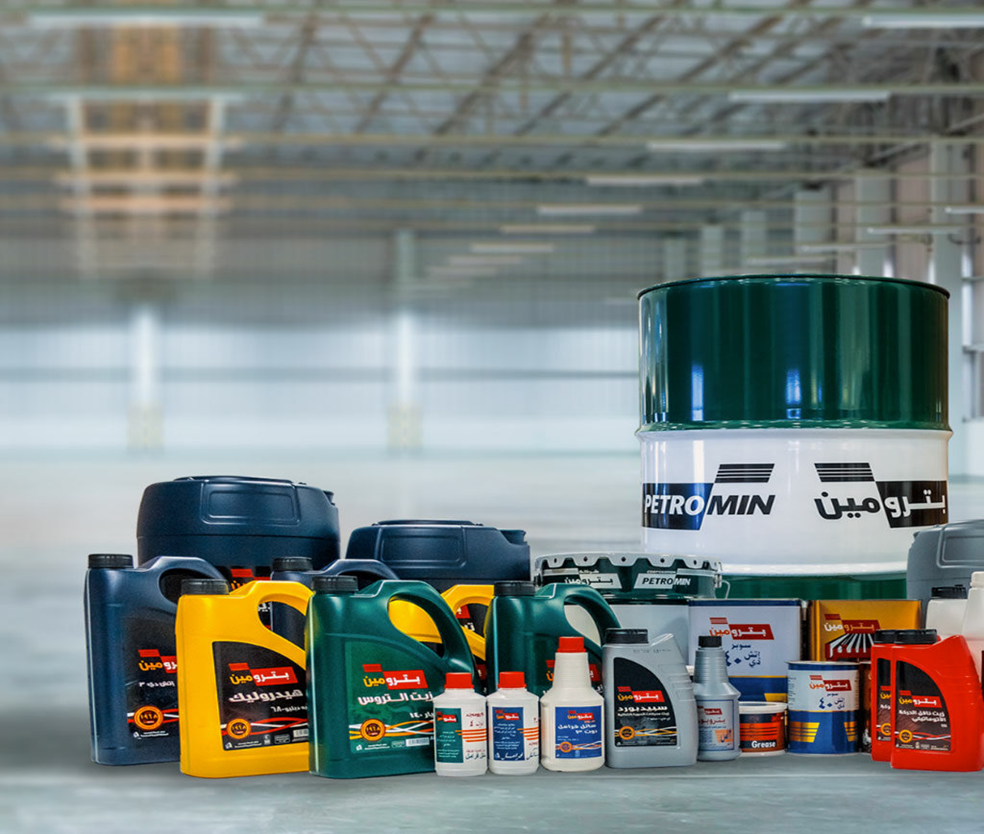
Petrolube is the market leader in the Middle East for lubricant products. With its state-of-the-art blending plant in Jeddah, backed up by Riyadh and Dubai Blending facilities, it provides world-class products to motorists, and to industrial and government institutions. Petrolube produces over 250 different lubricants products and exports products to over 35 countries in the GCC, Middle East, Africa, and Asia. Over the last 50 years Petrolube has become a market leader in the Middle East.
With a 41% market-share in KSA, state-of-the-art blending plants in Jeddah, Riyadh, and Dubai, and a network of six warehouses across the Kingdom, the carbon impact of transporting raw materials, supplies, and finished product is a significant part of Petrolube’s overall footprint. Petrolube is strategically focused on optimizing the efficiency of our operational outbound logistics to drive ongoing reductions in our carbon footprint using 2018 as a baseline.
Understanding that every improvement in logistics efficiency leads to measurable reductions in CO2 emissions, Petrolube continuously evaluates and adopts new technologies to increase the energy efficiency of its fleet, optimize the load-carrying capacity of its trucks, and accelerate the transition to clean energy alternatives such as hybrid, electric, hydrogen, or biodiesel vehicles. Led by our logistics management team, the initiative focuses on three critical opportunities to improve efficiency and reduce emissions:
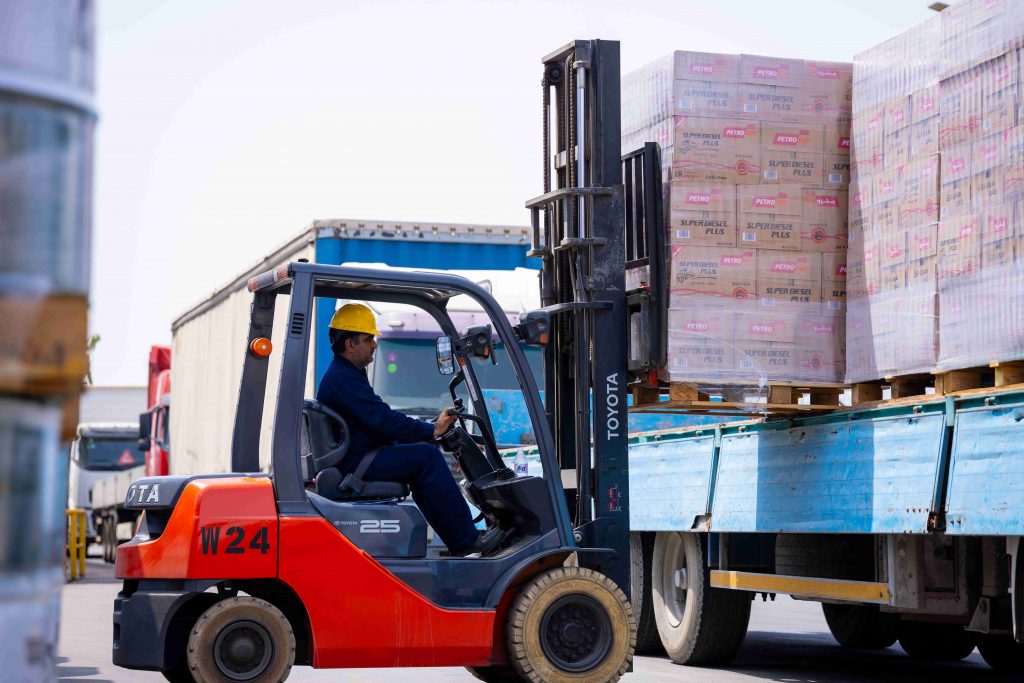
1. Capacity: By upgrading to 15-meter trailers, we have increased our hauling capacity, allowing us to transport 22-24 pallets of lubricants or 32- 34 drums in a single trip, compared to the previous capacity of 20-22 pallets or 26 drums. This enhancement reduces the number of trips needed, leading to lower fuel consumption and reduced CO2 emissions.
2. Route Optimization and Trip Planning: By optimizing our transportation routes to ensure shorter distances and minimal wasted travel and consolidating shipments on common delivery routes, we achieve decreased fuel consumption and CO2 emissions.
3. Modernizing Our Fleet: We have partnered with our transporters and fleet suppliers to phase out older, high-emissions trucks in our fleet, replacing them with newer, more fuel-efficient models and cleaner technologies.
The Challenge
The global economy categorizes the different kinds of carbon emissions a company creates through its own operations and across wider value chain. It is widely agreed that looking at your own operations (scope 1 & 2 emissions) is not enough, and that the greatest of opportunities for decarbonization exist by working in partnership across supply chains (scope 3 emissions).
Petrolube offers a range of 250 different lubricants products and exports these products to over 35 countries in the GCC, Middle East, Africa, and Asia. It is no surprise, therefore, that logistics is an area where both an inward review of Petrolube’s owned fleet, and engaging with their partner carriers, could make a considerable impact on the overall emissions across the supply chain.
LOGISTICS EFFICIENCY 2018-2023
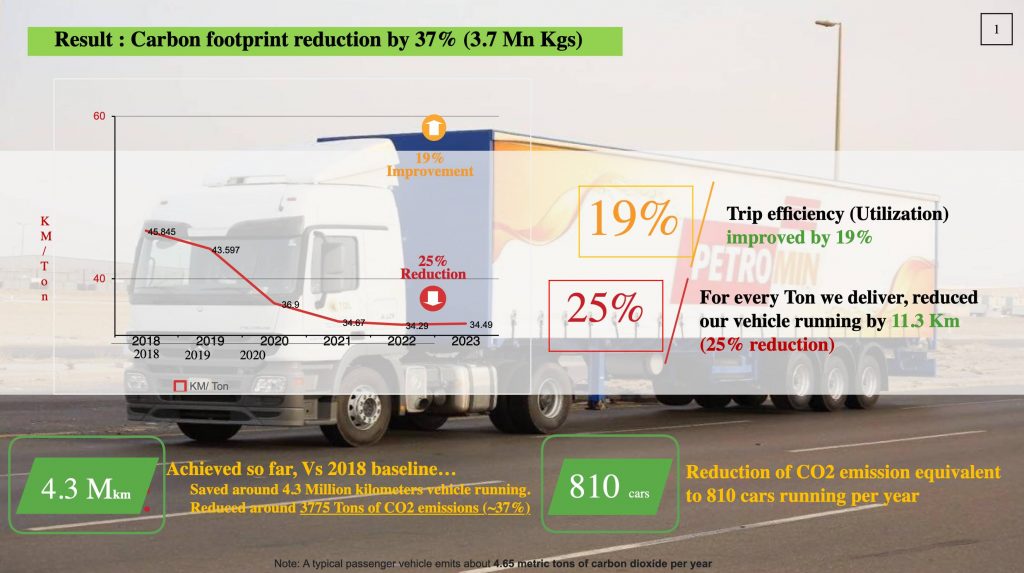

25%
REDUCTION IN AVERAGE KM DRIVEN PER TON OF PRODUCT DELIVERED. EQUIVALENT TO A REDUCTION OF AROUND 4.3 MILLION KM SINCE 2018
19%
IMPROVEMENT IN CAPACITY EFFICIENCY FOR EVERY TRIP
3.77 METRIC TON / 37%
REDUCTION IN CO2 EMISSIONS COMPARED TO 2018 BASELINE — THE EQUIVALENT ANNUAL EMISSIONS OF 820 CARS
Petrolube remains committed to ongoing innovation and exploration of new sustainable practices to further reduce our environmental impact and contribute to a greener future for the transportation industry.